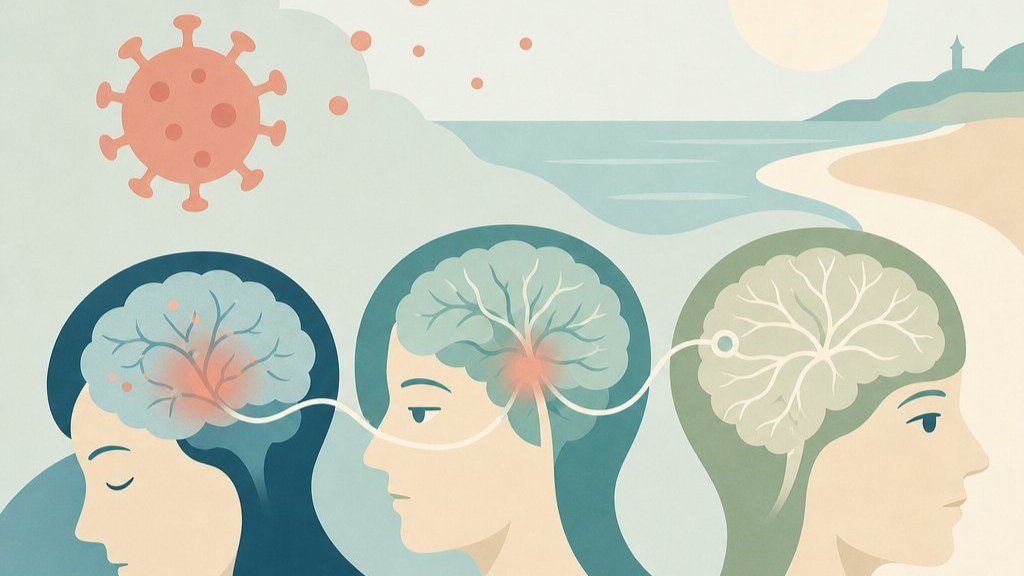
The Enigmatic Onset of Encephalitis Lethargica
The winter of 1916-1917 marked the emergence of a mysterious neurological disorder amidst the backdrop of World War I. In Vienna, Constantin von Economo, a neurologist of Greek descent, began to observe patients with perplexing sleep disturbances. This was not a mere case of insomnia or hypersomnia; the patients exhibited a paradoxical presentation where some could not stay awake while others were unable to sleep. Such a presentation hinted at a deeper complexity within the brain's regulatory systems, challenging the existing paradigms of sleep and wakefulness.
Von Economo's observations led him to hypothesize that distinct brain regions were responsible for sleep and wakefulness, a revolutionary idea at the time. His work laid the foundation for understanding the brain's sleep-wake mechanisms, suggesting that these states were not merely passive but actively organized processes. The initial symptoms of encephalitis lethargica could easily be mistaken for common viral infections, such as headaches, sore throats, and fevers. However, these symptoms quickly escalated into profound neurological disturbances, including excessive sleepiness or insomnia, ocular motor disturbances, and autonomic dysfunctions.
Von Economo's hypothesis about the localization of sleep and wakefulness was supported by his post-mortem examinations of affected brains. He observed that damage to specific regions, such as the posterior hypothalamus and adjacent midbrain, correlated with hypersomnolence, while lesions in the anterior hypothalamus and preoptic area were associated with insomnia. This anatomical correlation was groundbreaking, as it suggested that sleep and wakefulness were not simply the absence or presence of consciousness but were regulated by distinct neural circuits.
The disease, which von Economo termed encephalitis lethargica, spread rapidly across Europe and beyond, affecting thousands. By 1920, it had reached the industrialized world, with cases reported in major cities like London, Paris, and New York. Despite its widespread impact, the cause of encephalitis lethargica remained elusive, with no identifiable pathogen or diagnostic test available. The epidemic's spread was not uniform, with some regions experiencing more severe outbreaks than others, and the clinical presentation varied widely among patients, complicating efforts to define and diagnose the condition accurately.
Von Economo's work was paralleled by that of René Cruchet in France, who independently described similar cases. Despite the geographical and wartime barriers, the medical communities recognized the disease's distinctiveness, leading to a collaborative effort to understand its nature. The lack of a clear etiological agent led to various hypotheses, including viral, bacterial, and even environmental causes, but none were conclusively proven. The disease's ability to cause such diverse symptoms in different individuals suggested a complex interplay between the pathogen, the host's immune response, and the central nervous system's vulnerability.
The Aftermath: Postencephalitic Parkinsonism

While some patients recovered from the acute phase of encephalitis lethargica, others developed a chronic condition known as postencephalitic parkinsonism. This syndrome was characterized by a gradual loss of movement, diminished facial expressions, and other motor impairments. The condition was particularly distressing in children, who often exhibited behavioral changes and compulsions.
The anatomical basis for these symptoms was linked to damage in the basal ganglia and frontal lobes, regions involved in movement regulation and behavior. This raised philosophical questions about the nature of moral behavior and the biological underpinnings of character. The basal ganglia, particularly the substantia nigra and striatum, are critical for modulating motor activity, and their dysfunction leads to the hallmark features of parkinsonism, such as bradykinesia, rigidity, and tremor.
Postencephalitic parkinsonism also highlighted the role of the frontal lobes in behavior and personality. Damage to these areas can result in significant changes in personality, impulse control, and social behavior, which were observed in many affected children. These changes posed significant challenges for families and caregivers, as the affected individuals often retained cognitive abilities but struggled with behavioral regulation.
Despite the decline in new cases by the 1930s, those affected by postencephalitic parkinsonism continued to suffer, highlighting the distinction between the end of an epidemic and the end of a disease. The long-term impact of the disease on survivors underscored the importance of understanding the chronic sequelae of acute neurological illnesses. The persistence of symptoms in these individuals also suggested that the initial infection might have triggered a cascade of neurodegenerative processes, possibly involving abnormal protein accumulation, as later studies would suggest with the discovery of tau pathology in affected brains.
Levodopa: A Revolutionary Treatment

The discovery of levodopa in the mid-20th century marked a turning point in the treatment of parkinsonism. Researchers like Arvid Carlsson and Oleh Hornykiewicz demonstrated that dopamine deficiency in the striatum was a key factor in the motor symptoms of Parkinson's disease and postencephalitic parkinsonism. This discovery was pivotal, as it shifted the focus from structural damage to neurotransmitter deficiency, opening new avenues for therapeutic intervention.
Levodopa, a precursor to dopamine, could cross the blood-brain barrier and replenish dopamine levels, leading to remarkable improvements in patients' motor functions. In 1961, Hornykiewicz and Walther Birkmayer administered levodopa to patients with parkinsonism, observing significant enhancements in movement and speech. This breakthrough offered hope to those living with the long-term effects of encephalitis lethargica, providing a means to partially restore their ability to interact with the world.
The introduction of levodopa therapy was not without challenges. The optimal dosing required careful titration to balance efficacy with side effects, such as dyskinesias and psychiatric disturbances. The variability in patient responses highlighted the complexity of dopamine replacement therapy and the need for individualized treatment plans. Despite these challenges, levodopa remains the cornerstone of parkinsonism treatment, illustrating the profound impact of neurotransmitter research on clinical practice.
The success of levodopa also spurred further research into the pathophysiology of parkinsonism and related disorders. It underscored the importance of understanding the biochemical underpinnings of neurological diseases and paved the way for the development of other dopaminergic therapies, such as dopamine agonists and MAO-B inhibitors. The story of levodopa exemplifies the potential for translational research to transform patient care and improve quality of life for those with chronic neurological conditions.
Oliver Sacks and the Human Experience

Oliver Sacks, a neurologist at Beth Abraham Hospital in the Bronx, became deeply involved in the treatment of postencephalitic patients. His work, documented in the book 'Awakenings,' highlighted the profound impact of levodopa on individuals who had been living in a state of reduced mobility and expression for decades. Sacks's approach was unique, focusing not only on the neurological aspects but also on the personal stories and experiences of his patients.
Sacks observed that music could temporarily enhance their movement capabilities, suggesting that external stimuli could engage neural networks differently from internally generated actions. This observation was particularly intriguing, as it suggested that the brain's response to rhythmic and melodic cues could bypass some of the deficits in voluntary movement initiation. The phenomenon of kinesia paradoxa, where external cues facilitate movement in parkinsonian patients, provided a fascinating insight into the brain's adaptability and the potential for non-pharmacological interventions.
However, the effects of levodopa were not without complications. Some patients experienced dyskinesias and behavioral disturbances, illustrating the delicate balance required in dopamine replacement therapy. Sacks's detailed accounts of these experiences emphasized the need for a holistic approach to treatment, considering not only the physical symptoms but also the psychological and social dimensions of living with a chronic neurological condition.
Sacks's work also highlighted the importance of patient-centered care and the value of listening to patients' narratives. His ability to capture the human experience of neurological illness resonated with both the medical community and the general public, raising awareness of the challenges faced by individuals with neurological disorders. His writings continue to inspire clinicians and researchers to consider the broader context of disease and the impact of treatment on patients' lives.
The Unresolved Mystery of Etiology

Despite extensive research, the cause of the encephalitis lethargica epidemic remains unknown. Initial suspicions centered on the influenza pandemic of 1918, but subsequent investigations found no conclusive evidence linking the two. The temporal overlap between the two epidemics was compelling, but the lack of consistent pathological findings and the persistence of encephalitis lethargica cases well into the 1920s suggested a more complex etiology.
Modern studies have explored the possibility of autoimmune mechanisms, with some patients exhibiting antibodies against basal ganglia tissue. This aligns with findings in other neurological disorders, such as anti-NMDA receptor encephalitis, where immune processes disrupt normal brain function. The identification of autoimmune antibodies in contemporary encephalitis lethargica-like syndromes suggests that immune-mediated mechanisms could have played a role in the original epidemic.
The presence of tau pathology in postencephalitic parkinsonism, distinct from the alpha-synuclein pathology of Parkinson's disease, adds another layer of complexity to the disease's history. It suggests that an acute inflammatory event could set the stage for a degenerative proteinopathy later in life. This hypothesis is supported by the observation of similar tauopathies in other post-inflammatory and post-traumatic neurological disorders, highlighting the potential for acute insults to trigger long-term neurodegenerative processes.
The unresolved etiology of encephalitis lethargica underscores the challenges of understanding complex neurological diseases. It highlights the need for continued research into the interactions between infectious agents, immune responses, and neurodegeneration. The lessons learned from this historical epidemic remain relevant today, as researchers continue to investigate the long-term neurological consequences of infectious diseases and the potential for autoimmune mechanisms to contribute to neurodegenerative disorders.
Lessons from History: Implications for Modern Medicine
The story of encephalitis lethargica offers valuable insights into the nature of neurological diseases and the challenges of understanding their origins. It underscores the importance of considering long-term consequences and the potential for autoimmune processes to play a role in neurodegeneration. The historical epidemic serves as a reminder of the complexity of neurological disorders and the need for a multidisciplinary approach to their study and treatment.
As the world grapples with the aftermath of the COVID-19 pandemic, parallels can be drawn with the historical epidemic. Patients experiencing persistent neurological symptoms post-infection highlight the need for continued investigation into the long-term effects of infectious diseases on the nervous system. The emergence of 'long COVID' and its neurological manifestations echoes the challenges faced by survivors of encephalitis lethargica, emphasizing the importance of understanding the mechanisms underlying post-infectious neurological syndromes.
The history of encephalitis lethargica serves as a reminder that the disappearance of an epidemic does not mark the end of its scientific relevance. The quest to understand its etiology and impact continues, offering hope for future discoveries in neurology. The lessons learned from this epidemic can inform current and future research efforts, guiding the development of strategies to prevent and treat the long-term consequences of infectious diseases.
The story also highlights the importance of patient-centered care and the need to consider the broader context of disease. The experiences of individuals affected by encephalitis lethargica and their families underscore the impact of neurological disorders on quality of life and the importance of addressing the psychological and social dimensions of illness. As researchers and clinicians continue to explore the complexities of neurological diseases, the lessons of encephalitis lethargica remain a valuable guide for understanding and addressing the challenges of modern medicine.
Source
Rogers JP, Mastellari T, Berry AJ, et al. Encephalitis lethargica: clinical features and aetiology. Brain Communications. 2024;6(5):fcae347.