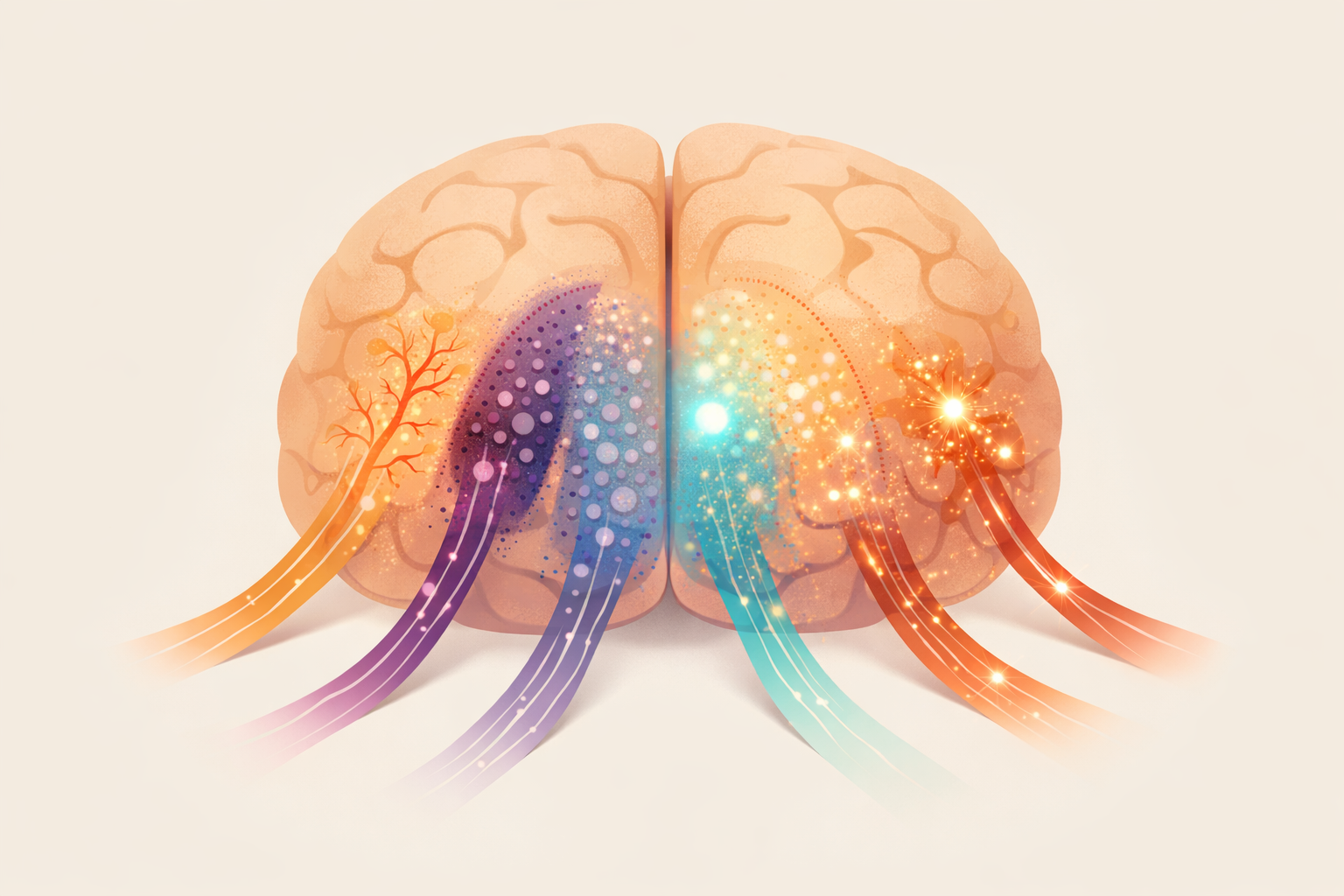
Introduction: One Condition, Multiple Causes
Frontotemporal lobar degeneration (FTLD) is not a single disease but a group of related conditions that affect the frontal and temporal lobes of the brain. These areas are responsible for behavior, personality, language, and decision-making.
FTLD is unique among brain conditions because it can result from several different underlying biological processes, often referred to as proteinopathies—diseases caused by abnormal protein buildup in the brain.
Although FTLD symptoms may appear similar across individuals, the underlying causes can vary greatly. Understanding these causes is vital for explaining symptom variations, the challenges in diagnosis, and potential future treatments.
What Is a Proteinopathy?
In a healthy brain, proteins help cells function normally by supporting communication between brain cells, maintaining structure, and clearing waste.
In FTLD, certain proteins become misfolded or accumulate abnormally. This interferes with brain cell communication and leads to damage in specific brain networks over time.
These protein changes typically spread through connected networks, which is why symptoms often follow recognizable patterns, such as changes in behavior, language, or movement.
The most significant proteinopathies in FTLD include:
- TDP-43 (the most common)
- Tau
- FUS (rare)
- Alzheimer's-related proteins (amyloid and tau), which can mimic FTLD
TDP-43: The Most Common Cause of FTLD
TDP-43, short for TAR DNA-binding protein 43, is the most common underlying cause of FTLD.
What Does TDP-43 Normally Do?
Under normal conditions, TDP-43 regulates gene expression in brain cells, managing protein production and supporting cellular function.
What Goes Wrong in FTLD?
In FTLD, TDP-43 becomes mislocalized and forms abnormal clumps inside brain cells, disrupting cellular processes.
This disruption leads to:
- Breakdown in neuron communication
- Loss of function in affected brain networks
- Gradual degeneration of specific regions
What Symptoms Are Associated with TDP-43?
TDP-43 is often associated with:
- Behavioral changes (apathy, impulsivity, loss of empathy)
- Language difficulties, especially problems understanding meaning (semantic variant PPA)
Since TDP-43 affects frontal and temporal networks, it often leads to conditions like:
- Behavioral variant frontotemporal dementia (bvFTD)
- Semantic variant primary progressive aphasia (svPPA)
Why Is TDP-43 Important?
TDP-43 is crucial because:
- It is the most common cause of FTLD
- It explains many classic FTLD presentations
- It is also involved in other conditions, such as ALS (amyotrophic lateral sclerosis)
Currently, no direct test exists to confirm TDP-43 during life, and no disease-modifying treatment is available. However, it remains a major focus of ongoing research.
Tau: A Different Type of Protein Problem
Tau is another key protein involved in FTLD, with distinct behavior from TDP-43.
What Does Tau Normally Do?
Tau stabilizes the internal structure of brain cells and maintains the "tracks" for nutrient and signal movement within neurons.
What Happens in Tau-Related FTLD?
In tau-related diseases, tau becomes abnormally phosphorylated, forming tangles inside brain cells. These tangles disrupt cell structure, leading to cell death.
What Symptoms Are Associated with Tau?
Tau-related FTLD is often linked to:
- Movement disorders
- Problems with balance and coordination
- Difficulty with eye movements
- Executive dysfunction (planning, organization)
Common syndromes associated with tau include:
- Progressive supranuclear palsy (PSP)
- Corticobasal syndrome (CBS)
- Some forms of behavioral variant FTD
How Is Tau Different from TDP-43?
While both cause FTLD, they affect different systems:
- TDP-43 impacts behavior, emotion, and language meaning
- Tau affects movement, control, and executive function
This distinction helps clinicians make educated guesses about the underlying cause, even though direct confirmation is not possible.
FUS: A Rare but Important Cause
FUS (fused in sarcoma) is a less common protein associated with FTLD.
Key Features of FUS
- Rare cause of FTLD
- Often affects younger individuals
- May lead to more rapid or severe symptoms
FUS-related disease can resemble other FTLD forms but may exhibit distinct imaging or clinical presentation patterns.
Like TDP-43 and tau, no direct test or targeted treatment for FUS-related disease currently exists.
Alzheimer's Disease: An Important Mimic
Although Alzheimer's disease is not technically FTLD, it is important because it can resemble FTLD, especially in early stages.
Why Does Alzheimer's Mimic FTLD?
Alzheimer's disease involves two proteins:
- Amyloid
- Tau
While commonly associated with memory loss, Alzheimer's can also affect:
- Language (logopenic PPA)
- Behavior (executive or frontal variants)
When Alzheimer's impacts frontal or temporal networks, it can closely resemble FTLD.
Why Does This Matter?
This distinction is crucial because:
- Alzheimer's disease can be confirmed with biomarker testing (blood, spinal fluid, PET scans)
- FTLD-related proteinopathies currently cannot be directly confirmed during life
Differentiating these conditions is a key aspect of diagnosis.
Why Symptoms Alone Are Not Enough
A critical concept to understand is:
Symptoms do not reliably indicate the underlying cause.
For example:
- Two people with similar behavioral symptoms may have different proteinopathies
- The same proteinopathy can appear differently depending on affected brain networks
This is why clinicians focus on:
- Patterns of symptoms
- Brain imaging
- Rate of progression
- Associated features (movement, language, etc.)
Even with this information, some uncertainty remains.
Why There Are No Direct Tests (Yet)
Currently, there are no widely available tests to confirm:
- TDP-43
- Tau (outside of Alzheimer's context)
- FUS
These proteins are difficult to measure directly in living patients.
Diagnosis relies on:
- Clinical expertise
- Imaging patterns
- Exclusion of other causes (like Alzheimer's disease)
Research is actively ongoing to develop biomarkers for these proteinopathies.
Treatment Today: What We Can and Cannot Do
Currently, there are no disease-modifying treatments for:
- TDP-43
- Tau (non-Alzheimer's forms)
- FUS
Treatment focuses on:
- Managing symptoms
- Supporting daily function
- Helping families adapt and plan
Hope for the Future: Clinical Trials and Research
Although no disease-modifying treatments exist yet, this is an area of active and rapidly evolving research.
Current efforts include:
- Developing biomarkers to detect specific proteinopathies
- Targeting tau and TDP-43 with new therapies
- Understanding how these diseases spread through brain networks
There is strong hope that:
- More precise diagnosis will become possible
- Targeted treatments will be developed
What This Means for Patients and Families
FTLD is not caused by personality, lifestyle, or choices. It reflects biological changes in the brain affecting different networks.
Understanding the underlying cause helps:
- Explain symptoms
- Guide expectations
- Inform care decisions
- Prepare for future treatment options
Even when the exact protein cannot be confirmed, identifying the most likely cause allows for more informed care.
Final Thoughts
FTLD is a complex group of diseases with multiple underlying causes. The most important proteins—TDP-43 and tau—affect the brain in different ways, leading to distinct symptom patterns.
Despite current testing and treatment limitations, research is advancing rapidly. The goal is to move toward a future where:
- The exact cause can be identified during life
- Treatments can target specific proteins
- Care can be more personalized and effective
Understanding FTLD's biology helps patients and families make sense of what is happening and navigate the path forward with greater clarity.