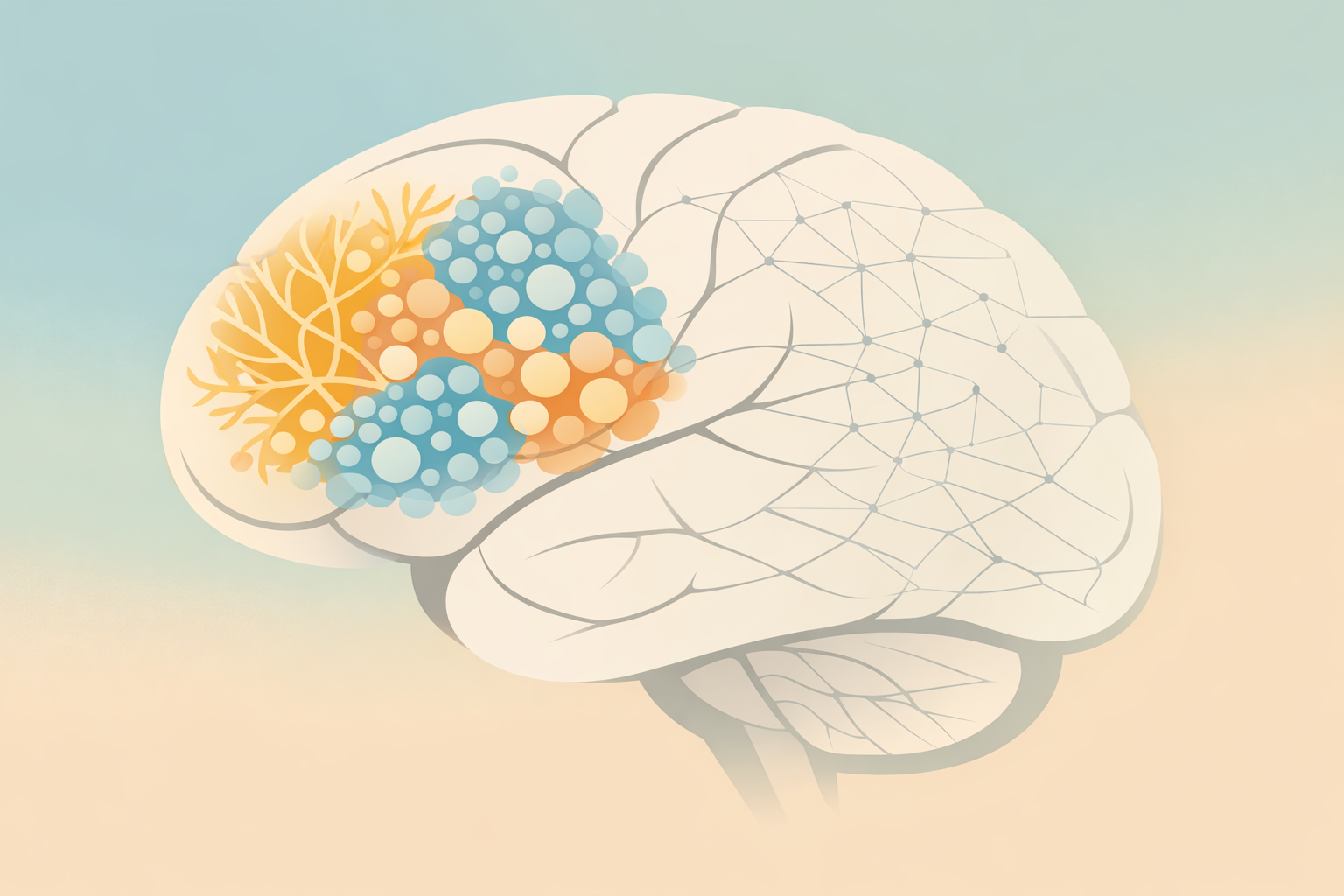
I. Framing the Problem: FTLD as a Protein-Network Disease
Frontotemporal lobar degeneration (FTLD) includes a group of network-selective neurodegenerative syndromes characterized by vulnerability in frontal and anterior temporal systems, leading to behavioral changes, language difficulties, and motor issues. Biologically, FTLD involves distinct yet overlapping proteinopathies.
As of 2026, understanding FTLD involves a triangulated model:
Proteinopathy → Cellular dysfunction → Network degeneration → Clinical syndrome
This aligns with educational materials emphasizing dementia as a syndrome with multiple causes, not a single disease.
Within FTLD, three major protein classes are predominant:
- Tau (FTLD-tau)
- TDP-43 (FTLD-TDP)
- FUS and related rare inclusions (FTLD-FUS)
Each class triggers distinct molecular cascades but leads to common network failures.
II. Core Proteinopathies in FTLD (2026 Updated Breakdown)
1. FTLD-TDP (~50-60%)
This is the most prevalent pathological substrate in FTLD.
Molecular Mechanism
TDP-43 is a nuclear RNA-binding protein involved in:
- RNA splicing
- mRNA stability
- Stress granule dynamics
Pathology involves:
- Nuclear clearance
- Cytoplasmic aggregation
- Phosphorylation and ubiquitination
This leads to:
- Loss of nuclear function (loss-of-function toxicity)
- Cytoplasmic gain-of-function toxicity
- Dysregulated RNA metabolism across neurons
Subtypes (Type A-E)
- Type A: Neuronal cytoplasmic inclusions and dystrophic neurites
- Type B: Diffuse cytoplasmic inclusions
- Type C: Long dystrophic neurites
- Type D/E: Rare genetic/atypical forms
Clinical Associations (2026 Consensus)
- bvFTD: ~50-60% TDP
- svPPA: ~80-90% TDP (Type C dominant)
- nfvPPA: ~10-20% TDP
- ALS-FTD spectrum: ~95% TDP
This reflects the emphasis that different syndromes result from different brain regions affected, not a single disease process.
2. FTLD-Tau (~35-45%)
This is the second most common form, often dominant in motor phenotypes.
Molecular Mechanism
Tau stabilizes microtubules. Pathology involves:
- Hyperphosphorylation
- Misfolding
- Aggregation into fibrils
Key distinction:
- 3R tau vs 4R tau isoforms
Major Tauopathies in FTLD
- PSP (4R tau)
- CBD (4R tau)
- Pick's disease (3R tau)
Clinical Associations
- PSP: ~90% tau
- CBS: ~50% tau (heterogeneous)
- bvFTD: ~40% tau
- nfvPPA: ~60-70% tau
PSP and CBS are highlighted as FTLD syndromes with motor and cognitive overlap, though they are distinct tau-driven degenerations, not Alzheimer variants.
3. FTLD-FUS (~5-10%)
This form is rare but biologically significant.
Mechanism
FUS is another RNA-binding protein with:
- Nuclear transport dysfunction
- Cytoplasmic aggregation
Distinctive features:
- Younger onset
- Severe behavioral phenotype
- Caudate atrophy
Clinical Associations
- Primarily bvFTD variants
- Minimal overlap with language syndromes
III. Syndrome-Protein Mapping (2026 Refined Estimates)
Below is a clinically relevant approximation integrating large autopsy cohorts:
- bvFTD: 50-60% TDP, 35-40% Tau, 5-10% FUS, rare others
- svPPA: 80-90% TDP, <10% Tau, rare others
- nfvPPA: 10-20% TDP, 60-70% Tau, rare others, AD (~20%)
- PSP: ~0% TDP, >90% Tau, 0% FUS, rare others
- CBS: ~20% TDP, ~50% Tau, rare others, AD (~30%)
IV. The Critical Insight (2026): Phenotype ≠ Pathology
The key conceptual shift:
Clinical syndromes are network syndromes - not protein diagnoses
This is supported by materials that define syndromes by affected brain regions and resulting symptoms, not underlying biology.
Example:
- CBS
- Tau (classic CBD)
- Alzheimer pathology (~30%)
- TDP (minor)
- nfvPPA
- Tau dominant
- AD overlap significant
Thus, proteinopathy prediction is probabilistic, not deterministic.
V. Network Selectivity and Regional Vulnerability
Why do proteins result in different syndromes?
Selective Vulnerability Model
Each protein targets specific networks:
- TDP-43
- Anterior temporal (semantic)
- Salience network (bvFTD)
- Tau
- Motor networks (PSP, CBS)
- Dorsal frontal circuits
- FUS
- Striatal-frontal loops
This aligns with the Alzheimer's framework, noting that symptoms reflect which brain systems are affected, not just the disease label.
VI. Cellular Pathophysiology → Clinical Expression
TDP-43
- RNA dysregulation → synaptic collapse
- Loss of semantic networks → svPPA
- Salience network failure → bvFTD
Tau
- Cytoskeletal instability → axonal degeneration
- Brainstem + basal ganglia → PSP
- Cortical-basal loops → CBS
FUS
- Nuclear transport failure → widespread dysfunction
- Severe behavioral disinhibition → bvFTD (young onset)
VII. Relationship to Other Proteinopathies
FTLD exists within a broader context:
Alzheimer's Disease
- Amyloid + tau
- Network-dependent phenotypes (memory, language, visuospatial)
Synucleinopathies
- Alpha-synuclein aggregation
- Movement + cognition spectrum
Key 2026 Insight
Neurodegeneration is best understood as interacting protein systems, not isolated diseases.
VIII. Biomarkers and Diagnostic Evolution (2026)
CSF / Blood
- p-tau (AD vs FTLD differentiation)
- Neurofilament light (NfL) → severity marker
Imaging
- MRI: network atrophy patterns
- FDG-PET: metabolic signatures
Emerging
- TDP-43 biomarkers (still limited)
- Tau PET (imperfect but evolving)
Clinical Principle
As emphasized in lumbar puncture guides:
Biomarkers clarify biology, not replace clinical context
IX. Genetic Architecture
Major Genes:
- C9orf72 → TDP
- GRN → TDP
- MAPT → Tau
Phenotypic variability:
The same mutation can lead to multiple syndromes.
X. Temporal Evolution and Disease Trajectories
Consistent with progression frameworks:
- Stability
- Gradual decline
- Rapid progression
FTLD often follows:
- Behavioral early → global later
- Language focal → generalized collapse
XI. Integration with Cognitive Spectrum
FTLD is part of a broader continuum:
- Normal aging
- MCI (~10-15% annual progression risk)
- Dementia
Differences from AD include:
- Earlier behavioral/language disruption
- Less early memory involvement
XII. Therapeutic Implications (2026)
Current State:
- No disease-modifying therapies
Emerging Targets:
Tau
- Anti-tau antibodies
- Microtubule stabilizers
TDP-43
- RNA modulation
- Proteostasis pathways
Network-based approaches
- Neuromodulation
- Behavioral/environmental structuring
XIII. Unifying Concept: FTLD as a Failure of Integration
The broader framework (Fractal Field Model) aligns strongly here:
FTLD represents collapse across:
- Activation
- Integration
- Volitional alignment
In classical neurology terms:
- Behavioral disinhibition → salience network failure
- Language breakdown → semantic network collapse
- Motor syndromes → integration of cortical-subcortical loops
XIV. Final Synthesis
FTLD is not one disease, nor even one category of diseases. It is best understood as:
A family of protein-driven, network-selective degenerations where molecular pathology determines vulnerability, but network architecture determines phenotype.
Key Takeaways:
- TDP-43 dominates (~60%)
- Tau drives motor syndromes and a large subset (~40%)
- FUS is rare but distinct
- Phenotype ≠ pathology
- Overlap with AD is substantial
- Biomarkers are improving but incomplete
- Future direction: network + molecular integration