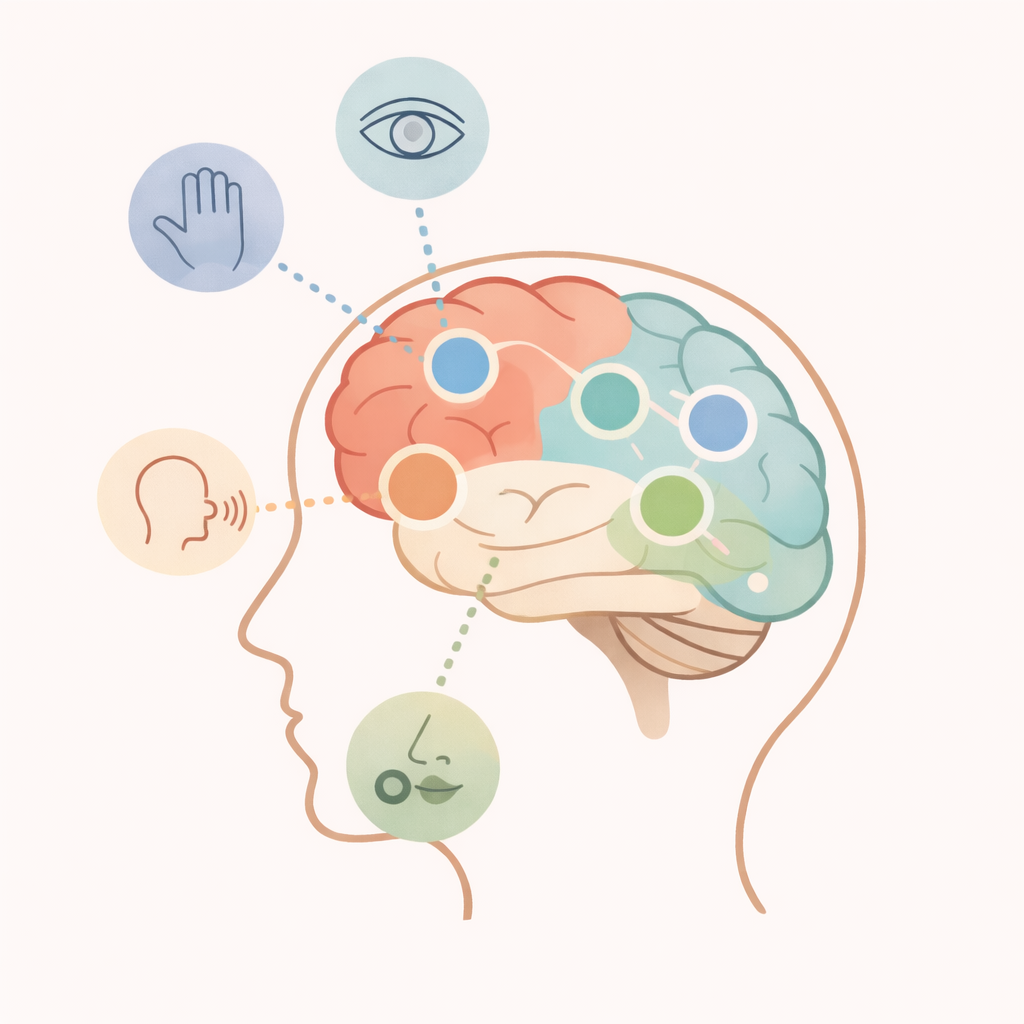
Frontotemporal disease encompasses a group of brain disorders that progressively impact the frontal and temporal lobes. These brain regions play crucial roles in behavior, decision-making, interpersonal relationships, language, and complex actions. Because the disease affects different networks in different people, its manifestations vary. Some individuals experience early changes in behavior and interpersonal interactions, others face speech and language challenges, while others have movement, balance, or coordination issues.
The term frontotemporal lobar degeneration (FTLD) is often used to describe this category of disorders. "Lobar degeneration" refers to a progressive illness targeting specific brain lobes. Initially, it is a category diagnosis, followed by a subtype diagnosis based on the pattern of symptoms and brain network involvement over time.
This category is significant because early-stage frontotemporal disease can often be misinterpreted. Behavioral symptoms may resemble psychiatric conditions, language symptoms might be mistaken for anxiety or hearing loss, and movement symptoms can be confused with Parkinson's disease. A thorough evaluation is essential to differentiate between surface symptoms and their underlying causes.
The following is a patient-oriented overview of the major clinical forms of frontotemporal disease, their presentations, common observations from families, and their implications in daily life.
A shared concept: "Different networks, different first symptoms"
To understand frontotemporal disease, think of the brain as a collection of interconnected networks. Some networks support social judgment and emotional attunement, others support speech production and grammar, while others support word meaning and knowledge. Frontotemporal disease involves the weakening of one or more of these networks over time.
As a result, initial symptoms often do not involve "forgetting everything." A person might recall events while struggling with behavior, language, or judgment. As more networks are affected, additional symptoms may arise.
1) Behavioral Variant Frontotemporal Dementia (bvFTD)
What it is:
Behavioral variant frontotemporal dementia is the most common form of FTLD, primarily affecting the frontal lobe networks responsible for impulse control, judgment, motivation, social awareness, and interpreting others' emotions.
How it tends to begin:
Families often notice a change in "who the person is" before memory issues arise. The person may appear less empathetic or socially aware, or less concerned about their words and actions. Some become apathetic, disengaged, or unmotivated, while others develop repetitive behaviors or rigid habits. Impulsivity and inappropriate actions may also occur.
What daily life can look like:
In early bvFTD, independence may appear intact, but the person may struggle with navigating complex situations safely. Work performance can decline due to poor judgment, disorganization, or interpersonal conflicts. Risky financial decisions and strained social relationships are common, as is a decline in hygiene and self-care due to altered internal drive and prioritization.
A key clinical point:
Memory can be relatively preserved early on, which can confuse families. The issue often lies in the brain's ability to regulate behavior, anticipate consequences, and adapt to context flexibly.
2) Nonfluent/Agrammatic Primary Progressive Aphasia (nfvPPA)
What it is:
Nonfluent/agrammatic primary progressive aphasia is a frontotemporal syndrome where the primary early change is in speech production. While individuals know what they want to say, converting thoughts into fluent speech becomes challenging. This affects the brain systems coordinating grammar, sentence structure, and motor planning for speech.
How it tends to begin:
Early signs may be subtle, such as slower or more effortful speech, shorter sentences, or simplified grammar. Speech can sound strained or labored, and over time, speaking may become exhausting or frustrating, leading to avoidance of conversation.
What daily life can look like:
Communication becomes the main challenge. The person may understand much of what is said but struggle to express themselves, leading to misconceptions of depression or withdrawal. Families often find that slowing the pace, allowing extra time, and using supportive strategies can preserve connection as speech becomes more difficult.
A key clinical point:
In nfvPPA, the issue isn't "forgetting words" but difficulty producing fluent, well-formed speech, suggesting intact language concepts but struggling output pathways.
3) Semantic Variant Primary Progressive Aphasia (svPPA)
What it is:
Semantic variant primary progressive aphasia affects the brain networks responsible for storing meaning—understanding what words represent, what objects are, and what concepts signify. This typically impacts the anterior temporal lobe systems supporting semantic understanding.
How it tends to begin:
Individuals may speak fluently but gradually use less precise words, substituting general terms for specific nouns. They may struggle to understand certain words, especially less common ones, and later may have difficulty recognizing objects or retrieving names.
What daily life can look like:
Conversation can remain fluid while meaning erodes, which can be disorienting for families. Over time, comprehension difficulties can affect reading and understanding instructions, even if speech remains fluent. Routines, visual cues, and communication adjustments can help reduce reliance on precise naming.
A key clinical point:
svPPA is often misunderstood as it's not initially a problem of fluency but one of language comprehension and conceptual knowledge, with speech production intact but meaning loss progressing.
4) Progressive Supranuclear Palsy (PSP)
What it is:
Progressive supranuclear palsy is a syndrome often categorized under FTLD, associated with frontotemporal neurodegeneration, often "tau-related." It affects systems involved in balance, gait, posture, eye movements, and executive function and involves deeper brain structures and brainstem pathways.
How it tends to begin:
Early signs include unsteadiness and backward falls, stiffness, and slowness, resembling Parkinson's disease. A hallmark is difficulty with specific eye movements, although this might not be evident early. Cognitive changes can include slowed thinking and difficulty with planning.
What daily life can look like:
Safety planning becomes crucial due to early walking and balance issues. Falls pose significant injury risks, necessitating home adaptations, physical therapy, and mobility support reassessment. Speech clarity and swallowing changes require monitoring for choking risk and weight loss.
A key clinical point:
PSP can resemble Parkinson's disease initially, but balance problems, falls, eye movement changes, and the overall trajectory often differentiate it over time.
5) Corticobasal Syndrome (CBS)
What it is:
Corticobasal syndrome is characterized by a pattern of movement dysfunction and higher-order cortical difficulties, often affecting one side more than the other. CBS can result from various underlying diseases; it fits within the FTLD spectrum and overlaps with other neurodegenerative categories. It's termed a "syndrome" because the outward pattern is recognizable despite varying underlying biology.
How it tends to begin:
Families may notice that one hand or arm "doesn't cooperate," becoming stiff, clumsy, or slow. Difficulty with skilled movements like buttoning or using utensils may occur, even if strength is preserved. Coordination issues or challenges with learned actions may also arise, and speech and language changes can be present.
What daily life can look like:
CBS creates a unique disability, interfering with the integration of thinking and movement. People may feel their limb isn't responding as desired, leading to frustration and functional loss. Occupational therapy, adaptive strategies, and safety planning can help maintain independence.
A key clinical point:
CBS isn't defined by memory loss but by asymmetric movement difficulty and cortical dysfunction, requiring careful diagnosis as different diseases can produce similar patterns.
Why these categories matter clinically
These frontotemporal syndromes are more than just labels; they assist care teams in anticipating symptoms, identifying necessary supports, and selecting appropriate therapies to enhance daily function. They also guide decisions on imaging, cognitive and speech-language testing, safety planning, caregiver support, and ongoing follow-up.
A frontotemporal diagnosis marks the start of an ongoing partnership rather than a single moment. The most effective plan is adaptable, focusing on preserving safety, dignity, and family support, while ensuring care decisions align with the patient's goals and values.