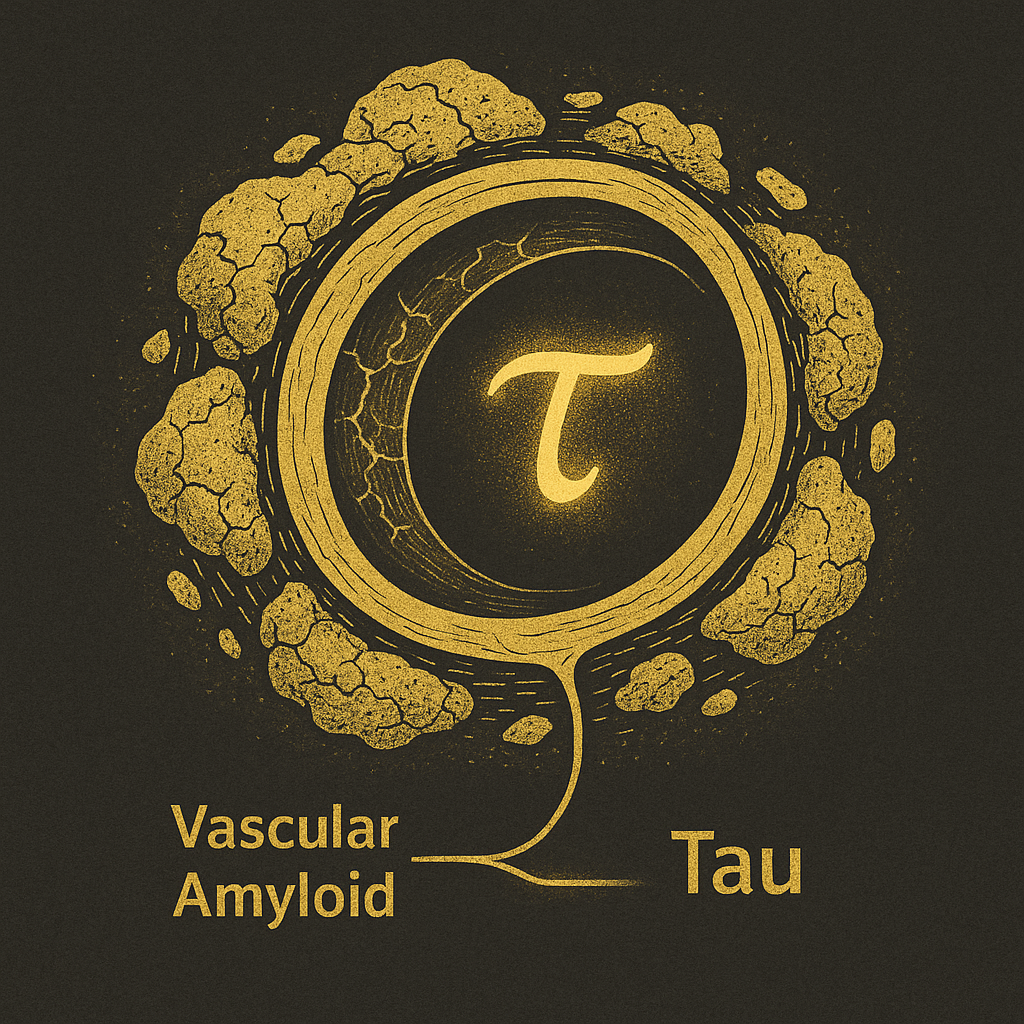
Cerebral amyloid angiopathy (CAA) is a challenging factor in cognitive decline associated with aging and Alzheimer's disease (AD). While treatments have predominantly targeted parenchymal Aβ plaques, the vascular aspect - amyloid deposition in cerebral vessels - leads to microbleeds, impaired clearance, and amyloid-related imaging abnormalities (ARIA), complicating monoclonal antibody therapies. A 2025 study by Jury-Garfe et al. in Alzheimer's & Dementia explores whether removing tau, which amplifies Aβ-induced toxicity in Alzheimer's models, can protect the cerebrovasculature from amyloid injury.
The researchers utilized a Familial Danish Dementia (Tg-FDD) mouse model, which develops vascular amyloid (ADan) without parenchymal plaques, crossed with tau-null (mTau⁻/⁻) mice to produce Tg-FDD/mTau⁻/⁻ offspring. This approach provided an opportunity to examine tau's role in CAA-type pathology.
Principal Findings
At around 22 months, tau-depleted Tg-FDD mice exhibited significant behavioral, electrophysiological, vascular, and molecular improvements.
- Behavioral and Synaptic Rescue
Grip-strength tests showed restored motor performance in tau-depleted mice. In hippocampal slices, inhibitory synaptic transmission (sIPSC frequency) partially recovered, indicating presynaptic normalization, although postsynaptic amplitude deficits remained. - Reduction of Vascular Amyloid and BBB Injury
Thioflavin-S staining revealed a significant decrease in vascular amyloid in tau-deleted mice. Fibrinogen leakage, a marker of blood-brain barrier compromise, was prevented, especially in males, highlighting sex-linked vulnerability and protection patterns. - Attenuation of Glial Reactivity and Inflammation
GFAP morphometry showed reduced astrocytic branching, while NanoString profiling indicated decreased pro-inflammatory transcripts and improved oligodendrocyte-related gene expression (Plp1, Mobp, Opalin). Tau depletion also restored cortical expression of the neuroprotective receptor CSF3R in IBA1-positive microglia.
These findings suggest that tau absence not only reduces vascular amyloid accumulation but also disrupts the cascade linking endothelial injury, glial activation, and neuroinflammation.
Mechanistic Interpretation
Jury-Garfe et al. propose that tau acts as a key amplifier in the feedback loop between vascular amyloid and inflammation. Removing tau may enhance perivascular drainage, reducing amyloidogenic peptide accumulation. Alternatively, tau ablation might suppress the astroglial-cytokine cycle that exacerbates vascular injury. The concentration of benefits in male mice suggests hormonal or baseline blood-brain barrier differences influence CAA vulnerability.
Critical Appraisal
This study's strength lies in its precision and restraint. The Tg-FDD model focuses on vascular amyloidosis, avoiding interference from parenchymal plaques. The integration of behavioral metrics, high-resolution histology, electrophysiology, and gene expression provides a comprehensive view of tau ablation's effects on the disease.
However, several caveats limit translation:
- Total versus Partial Depletion - The intervention involves a lifelong knockout, unlike human antisense oligonucleotide (ASO) strategies that achieve partial suppression in adulthood. Developmental compensation might exaggerate protective effects.
- Mechanistic Ambiguity - The cause-effect relationship between reduced vascular amyloid and diminished inflammation remains unclear. Improved clearance and decreased injury could be either cause or consequence.
- Incomplete Synaptic Rescue - Postsynaptic deficits persisted, indicating that other proteins or structural damage could be independent of tau.
- Sex-Specific Effects - The male-limited vascular rescue raises questions about hormonal regulation of perivascular permeability.
- Glial Specificity - Although neuron-to-glia cross-talk is inferred, direct evidence for glial-autonomous tau effects requires cell-specific manipulations.
Translational Relevance
For clinicians, the implications are significant. Tau reduction has already entered early-phase trials as an adjunct to amyloid therapy. If similar vascular protection is observed in humans, tau-lowering could mitigate both parenchymal and vascular amyloid injury, potentially reducing ARIA risk during anti-amyloid treatment.
Additionally, this study highlights the vascular dimension of tau pathology - not just a downstream effect of Aβ, but a participant in CAA's pathological self-propagation.
Perspective
As a clinician, I view this paper as evidence that tau is central to neurodegenerative and neurovascular pathology. The work of Jury-Garfe et al. redefines tau from being merely a marker of neuronal failure to a modifiable determinant of vascular health. The study invites a future where tau-targeted interventions are evaluated not only for cognitive effects but also for their impact on cerebrovascular stability.
CAA has often been seen as an epiphenomenon of Alzheimer's disease; this study suggests it may be the structural foundation underlying much of the disease's irreversibility.