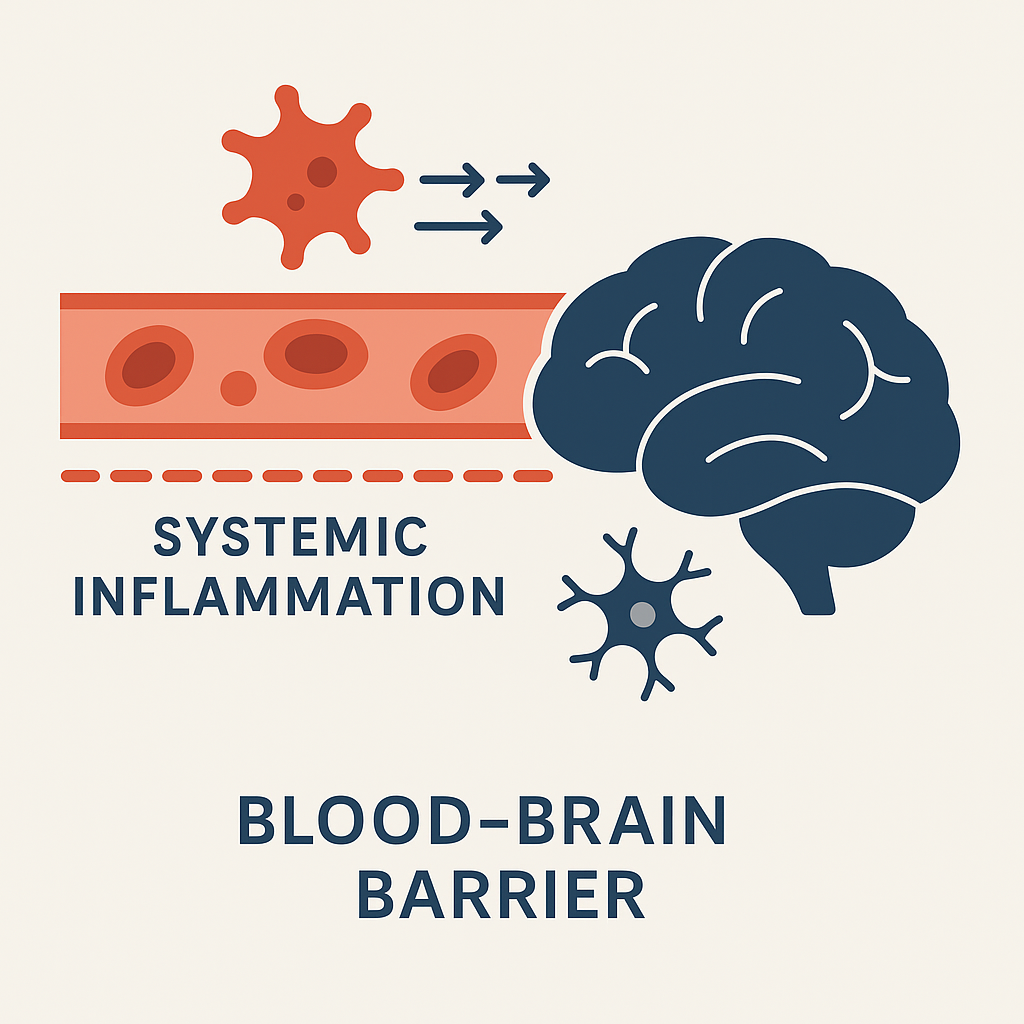
Chronic systemic inflammation is increasingly recognized as a key factor in the onset and progression of Alzheimer's disease (AD). Inflammatory cytokines such as TNF-alpha, IL-1 beta, IL-6, and dysregulated JAK-STAT signaling pathways link peripheral immune activation to microglial dysfunction, tau phosphorylation, and amyloid deposition.
Patients with autoimmune diseases such as rheumatoid arthritis (RA) have long been observed to carry a higher baseline dementia risk, yet paradoxically, certain immunomodulatory drugs may reduce that risk substantially. This has sparked significant interest in repurposing DMARDs - especially agents with known anti-inflammatory and signal-modulating effects - as potential preventive or adjunctive treatments for AD.
Key Findings: Human Evidence (2015–2025)
This summary synthesizes the best available evidence from large real-world epidemiological cohorts, case-control analyses, and the few completed or ongoing AD-specific trials. It emphasizes human data, practical feasibility, and mechanistic plausibility.
Strongest Evidence: Top Three Candidates
TNF Inhibitors
- Examples: Etanercept, Adalimumab, Infliximab
- Level of Evidence:
Multiple large-scale retrospective cohort studies and meta-analyses, collectively involving more than 500,000 patients, consistently show approximately 24 to 34 percent lower incidence of all-cause dementia and AD among RA patients treated with TNF-alpha blockers compared with conventional synthetic DMARDs (csDMARDs) or no DMARD at all. Pooled risk ratio for AD is around 0.66 versus csDMARDs, with etanercept often showing the strongest individual signal. One small randomized Phase II trial of etanercept in mild AD demonstrated excellent safety and tolerability and a trend toward slower cognitive decline, although it was not powered for definitive conclusions. - Mechanistic Rationale: TNF-alpha is a central pro-inflammatory driver implicated in AD pathology. Blocking systemic TNF can indirectly reduce neuroinflammation.
- Limitations: TNF biologics have limited blood-brain barrier penetration, so indirect effects may suffice for prevention but may not treat late-stage disease. Infections remain a key risk in elderly patients.
Hydroxychloroquine (HCQ)
- Level of Evidence:
A large 2023 Medicare new-user cohort study of approximately 109,000 RA patients showed that HCQ initiators had an 8 to 16 percent lower hazard for AD compared to methotrexate initiators. Experimental AD models demonstrate that HCQ can dampen neuroinflammation and rescue hippocampal synaptic plasticity through STAT3 pathway inhibition. However, an older 18-month randomized controlled trial in patients with mild AD was negative, suggesting that HCQ's greatest potential lies in prevention rather than treatment of symptomatic disease. - Mechanistic Rationale: Broad anti-inflammatory actions, interference with endosomal toll-like receptor signaling, and STAT3-driven microglial activation make HCQ biologically plausible for modulating early AD processes. It also has good brain penetration.
- Feasibility: HCQ is safe, inexpensive, and widely familiar to clinicians, with known safety monitoring for retinal exams and potential QT prolongation. It remains an excellent candidate for well-designed prevention trials in older adults at increased risk.
JAK Inhibitors (for example, Baricitinib)
- Level of Evidence:
Computational repurposing screens highlight JAK-STAT3 signaling as a key driver of AD-related inflammation. Some cohort analyses suggest a lower dementia incidence compared to csDMARDs, with a hazard ratio around 0.69, though the evidence remains early and limited. A Phase I/II basket trial (NADALS) is currently ongoing to test whether baricitinib reaches therapeutic cerebrospinal fluid levels and suppresses neuroinflammatory biomarkers in early AD and mild cognitive impairment. - Mechanistic Rationale: Small-molecule JAK inhibitors have superior CNS penetration compared to biologics and can dampen multiple pro-inflammatory cytokine pathways simultaneously.
- Feasibility: Oral dosing is practical for older adults, but the risks include infections and thrombosis, so careful patient selection and monitoring will be necessary. This class is highly promising if CNS engagement is confirmed.
Moderate or Mixed Evidence
Methotrexate
Some studies show reduced dementia risk with long-term low-dose methotrexate in RA patients, while others show no effect or even a slight increase in risk when combined with folate depletion. Mechanistically, it reduces peripheral inflammation but has poor brain penetration. There are no AD-specific trials, and the real-world signal is weaker than for TNF inhibitors or HCQ. Methotrexate is considered low priority for direct AD treatment but may still merit prevention research in high-inflammatory-risk groups.
IL-6 Inhibitors (Tocilizumab)
Current evidence is limited. Medicare cohort analyses show neutral results with no unique advantage over other biologics for dementia risk. There are no AD-specific trials. Although feasible in principle, cost and infection risk remain barriers. IL-6 blockade is a lower priority unless future trials identify a clear IL-6-driven AD subtype.
Abatacept
Multiple large comparative cohorts show no benefit for dementia risk compared to other biologic DMARDs. There are no clinical trials for AD, and although there is a mechanistic link to T-cell suppression, innate immunity appears to be more relevant in AD. Abatacept is not recommended for repurposing at this time.
Weak or Negative Signals
Sulfasalazine
There is no human evidence of cognitive benefit for sulfasalazine. One pooled analysis even suggests a slightly increased dementia risk. No trials in AD have been done. Sulfasalazine is not a viable candidate for repurposing.
Rituximab and Anakinra
Both have theoretical plausibility - rituximab via B-cell pathways and anakinra via IL-1 beta blockade - but neither has direct human AD data. Rituximab has not been tested for dementia risk, and anakinra has only preclinical support. Both remain speculative, with significant safety and feasibility hurdles for long-term use in older adults.
Practical Implications for Future Research
Top Priorities
- Conduct large, well-controlled trials of TNF inhibitors, especially etanercept, for AD prevention in high-risk inflammatory subgroups, ideally with biomarker stratification.
- Launch well-powered prevention or prodromal trials of hydroxychloroquine, building on its safety and multi-modal mechanism of action.
- Continue mechanistic and early-phase trials of JAK inhibitors to clarify CNS exposure and immune marker suppression.
Design Considerations
- Focus on early or preclinical stages: Current evidence suggests these agents may not reverse established neurodegeneration but could delay onset or slow early progression.
- Use subgroup biomarkers such as elevated TNF signatures or other neuroinflammatory profiles to enrich for likely responders.
- Consider combination therapy with amyloid or tau-targeting biologics where appropriate - a multi-hit approach is likely to be needed.
Takeaway for Research and Care Teams
This field is positioned for next-generation combination trials. Providers caring for patients with autoimmune diseases who may have elevated long-term cognitive risk should be aware of these emerging findings, as real-world treatment decisions today may influence future dementia outcomes. Researchers should push for precision-designed trials that stratify patients by inflammatory biomarker profiles, disease stage, and overall medical risk to maximize the chance of success.
Selected References
- Butchart, J., Brook, L., Hopkins, V., Teeling, J., Puntener, U., Culliford, D., ... & Holmes, C. (2015). Etanercept in Alzheimer disease: A randomized, placebo-controlled, double-blind, phase 2 trial. Neurology, 84(21), 2161–2168. https://doi.org/10.1212/WNL.0000000000001617
- Desai, R. J., Glynn, R. J., Li, X., Kim, S. C., & Solomon, D. H. (2022). Disease-modifying antirheumatic drug treatment and risk of Alzheimer's disease and related dementia among patients with rheumatoid arthritis in a US Medicare population. JAMA Network Open, 5(7), e2225334. https://doi.org/10.1001/jamanetworkopen.2022.25334
- Judge, A., Falaschetti, E., & Lunt, M. (2017). Anti-TNF therapy is associated with reduced risk of Alzheimer's disease in patients with rheumatoid arthritis: results from the British Society for Rheumatology Biologics Register (BSRBR). Alzheimer's & Dementia: Translational Research & Clinical Interventions, 3(4), 612–620. https://doi.org/10.1016/j.trci.2017.10.005
- Newby, D., Anan, G., Teh, L. S., & Lunt, M. (2020). Methotrexate and dementia risk in patients with rheumatoid arthritis: a multi-database case–control study. Alzheimer's Research & Therapy, 12(1), 38. https://doi.org/10.1186/s13195-020-00594-y
- Varma, V. R., Hollingsworth, P., Thomas, L., Gaskins, J., Weng, H., Li, S., ... & Oommen, A. M. (2023). Hydroxychloroquine use and risk of Alzheimer's disease among patients with rheumatoid arthritis: a Medicare new-user cohort study. Molecular Psychiatry. Advance online publication. https://doi.org/10.1038/s41380-023-02141-2
- Wang, Q., Gao, J., Wang, Y., Wang, Y., Xu, Y., & Zhou, J. (2023). Hydroxychloroquine alleviates cognitive impairment in an Alzheimer's disease mouse model via inactivation of the STAT3 signaling pathway. Aging Cell, 22(2), e13754. https://doi.org/10.1111/acel.13754
- Wu, J., Ren, Y., Li, Y., & Wang, P. (2024). Biologic DMARDs and risk of dementia in rheumatoid arthritis: a meta-analysis. RMD Open, 10(1), e002293. https://doi.org/10.1136/rmdopen-2023-002293
- Zhang, C., Yang, X., Zhang, Q., & Huang, T. (2022). JAK inhibitors as a potential treatment strategy for Alzheimer's disease: insights from network pharmacology and molecular docking. Frontiers in Pharmacology, 13, 823321. https://doi.org/10.3389/fphar.2022.823321
- National Institutes of Health. (2024). NADALS: Neuroinflammation and Alzheimer's Disease: A trial of baricitinib. ClinicalTrials.gov Identifier: NCT05189106. Retrieved from https://clinicaltrials.gov/ct2/show/NCT05189106