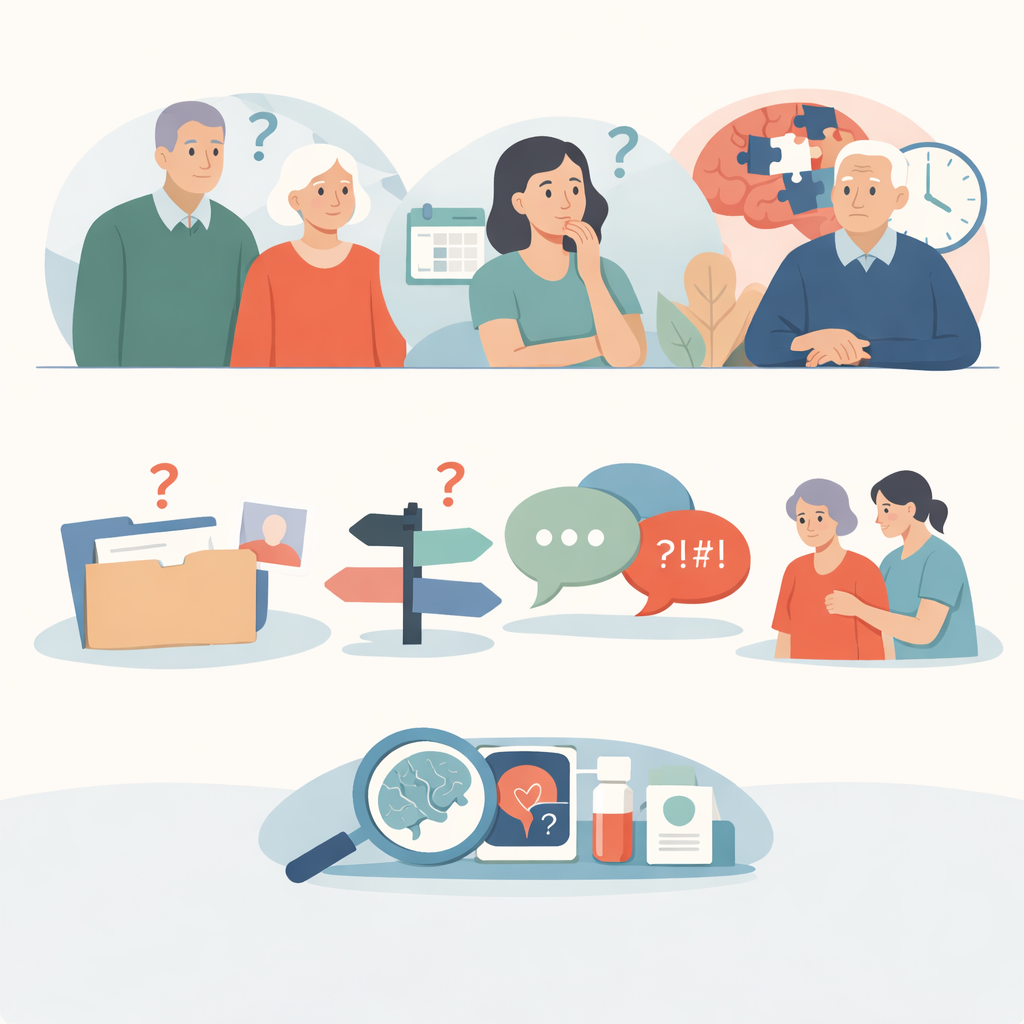
What Is Dementia?
Dementia is a clinical syndrome marked by a decline in cognitive abilities severe enough to hinder independent daily functioning. Rather than being a single disease, dementia is a pattern of cognitive impairment arising from various underlying brain conditions. These impairments typically affect cognitive domains such as memory, language, attention, executive function, or visual-spatial skills, resulting in difficulties with everyday activities that were previously manageable.
A key feature of dementia is that cognitive changes interfere with independence. This may include challenges in managing finances, organizing medications, preparing meals, navigating familiar places, maintaining employment, or managing personal care. Importantly, dementia is not a normal part of aging. While aging can bring mild changes in processing speed or word retrieval, dementia signifies a pathological process involving progressive brain dysfunction.
Dementia impacts millions worldwide with far-reaching effects on diagnosed individuals, families, caregivers, and healthcare systems. Understanding dementia, its development, and management is crucial for informed decision-making and compassionate care.
How Dementia Is Different From Normal Aging and Mild Cognitive Impairment
Cognitive change exists on a continuum, from normal aging to mild cognitive impairment (MCI) to dementia. Distinguishing these stages is critical, as prognosis, management strategies, and expectations vary significantly.
Normal Aging
Normal aging may involve subtle changes like taking longer to recall names, occasionally misplacing items, or needing more time to learn new information. These changes are typically infrequent, mild, and do not interfere with daily functioning. Individuals remain independent, capable of managing responsibilities, and can compensate using strategies like reminders or lists.
Mild Cognitive Impairment (MCI)
Mild Cognitive Impairment is an intermediate stage between normal aging and dementia. In MCI, objective cognitive changes are present and measurable, often affecting memory or attention, but independence is preserved. Individuals with MCI can still manage daily life, though they may require more effort, structure, or compensatory strategies.
Some individuals with MCI remain stable or improve, especially if factors like sleep disorders, depression, medication effects, or metabolic issues are addressed. Others may progress to dementia, particularly if the underlying cause is neurodegenerative.
Dementia
In dementia, cognitive impairment interferes with independent daily functioning. Routine tasks such as paying bills, cooking, driving, or managing appointments become increasingly difficult or unsafe. Over time, individuals may need assistance with personal care, decision-making, and supervision.
The key distinction between MCI and dementia is loss of independence, not just the presence of cognitive symptoms.
Cognitive Domains Affected in Dementia
Dementia can affect different cognitive domains depending on the underlying cause and brain regions involved. Understanding these domains helps explain the wide variability in symptoms.
- Memory: Difficulty learning new information, forgetting recent conversations or events, repeating questions, or misplacing items.
- Language: Word-finding difficulty, reduced fluency, impaired comprehension, or changes in speech production.
- Executive Function: Impaired planning, judgment, organization, problem-solving, and multitasking.
- Attention: Difficulty sustaining focus, following conversations, or shifting between tasks.
- Visual-Spatial Skills: Problems with navigation, recognizing faces or objects, judging distances, or interpreting visual information.
- Behavior and Personality: Changes in mood, motivation, social behavior, empathy, or impulse control.
Not all dementias primarily affect memory. Some begin with language, behavior, or visual-spatial changes, which can delay recognition if dementia is equated solely with memory loss.
How Is Dementia Diagnosed?
Dementia is diagnosed through a clinical evaluation, not a single test. Diagnosis involves integrating multiple sources of information to determine whether cognitive impairment is present, whether it interferes with independence, and what the most likely underlying cause may be.
Clinical History
A detailed history is essential, often involving both the patient and a knowledgeable informant, such as a family member or caregiver. Clinicians assess the onset, progression, and pattern of symptoms, as well as functional changes over time. Gradual progression suggests neurodegeneration, while abrupt or fluctuating changes may point to vascular, metabolic, or medication-related causes.
Cognitive Testing
Standardized cognitive testing evaluates multiple domains and helps quantify the degree of impairment. Testing may range from brief screening tools to comprehensive neuropsychological evaluations, depending on clinical needs.
Functional Assessment
Loss of independence is a defining criterion for dementia. Clinicians assess the ability to perform instrumental activities of daily living, such as finances, medications, transportation, and household management, as well as basic self-care when indicated.
Imaging and Laboratory Studies
Brain imaging, such as MRI or CT, helps identify structural changes, vascular injury, or alternative diagnoses. Laboratory studies evaluate reversible contributors, including vitamin deficiencies, thyroid dysfunction, metabolic abnormalities, or inflammatory conditions.
Biomarkers
In selected cases, biomarker testing—such as cerebrospinal fluid analysis or molecular imaging—may help identify specific disease processes, particularly in early or atypical presentations.
What Causes Dementia?
Dementia can arise from many underlying conditions, and mixed pathology is common, especially in older adults. Identifying the cause helps guide prognosis, management, and counseling.
Alzheimer's Disease
Alzheimer's disease is the most common cause of dementia. It is characterized by abnormal accumulation of amyloid-beta and tau proteins, leading to progressive neuronal dysfunction and brain atrophy. While memory impairment is often the earliest symptom, Alzheimer's disease can also present with language, visual-spatial, or executive dysfunction depending on the regions affected.
Vascular Cognitive Impairment
Vascular dementia results from reduced blood flow to the brain due to strokes, small vessel disease, or chronic ischemia. Cognitive decline may be stepwise or gradual and often affects executive function, attention, and processing speed. Vascular disease frequently coexists with Alzheimer's pathology.
Lewy Body Disease
Dementia with Lewy bodies is associated with abnormal alpha-synuclein protein deposition. It often presents with fluctuating cognition, visual hallucinations, REM sleep behavior disorder, and Parkinsonian motor features.
Frontotemporal Degeneration
Frontotemporal dementia affects the frontal and temporal lobes and often presents with behavioral changes or language impairment rather than memory loss. It tends to occur at a younger age than Alzheimer's disease.
Other Causes
Additional causes include Parkinson's disease dementia, normal pressure hydrocephalus, prion disease, autoimmune or inflammatory conditions, infections, and metabolic disorders. Some causes are partially reversible, emphasizing the importance of thorough evaluation.
How Dementia Progresses
Dementia is typically a progressive condition, though the rate and pattern of decline vary widely between individuals and diagnoses. Progression is influenced by underlying pathology, comorbid medical conditions, cognitive reserve, and access to care and support.
Early Stages
In early dementia, individuals may struggle with complex tasks such as financial management, multitasking, or navigation. Insight may still be present, and compensatory strategies can help maintain function.
Middle Stages
As dementia advances, individuals often require assistance with daily activities, experience increasing memory and language impairment, and may develop behavioral or psychological symptoms such as anxiety, apathy, or agitation.
Later Stages
In advanced dementia, individuals may require help with basic self-care, have limited communication, and become increasingly vulnerable to medical complications. Care needs intensify, and goals of care shift toward comfort, dignity, and quality of life.
Understanding the disease stage helps families anticipate needs, plan for safety, and align care with values and goals.
Behavioral and Psychological Symptoms of Dementia
Many individuals with dementia experience behavioral or psychological symptoms at some point. These may include depression, anxiety, apathy, irritability, agitation, hallucinations, delusions, or sleep disturbances. These symptoms often reflect brain changes, unmet needs, environmental stressors, or medical comorbidities rather than intentional behavior.
Management prioritizes non-pharmacologic strategies, such as routine, environmental modification, reassurance, and caregiver education. Medications may be used selectively when symptoms cause significant distress or safety concerns.
What Can Be Done for Dementia?
Although there is currently no cure for most causes of dementia, much can be done to improve quality of life, manage symptoms, and support patients and caregivers.
Medical Management
Medications may help with cognition, mood, sleep, or behavioral symptoms in selected cases. Treatment decisions are individualized, balancing potential benefits and risks.
Non-Pharmacologic Strategies
Non-pharmacologic interventions are foundational and include structured routines, environmental cues, cognitive engagement, physical activity, social connection, and caregiver education.
Safety and Planning
Safety planning addresses issues such as driving, medication management, fall prevention, and supervision. Early planning allows individuals to participate in decisions about finances, healthcare preferences, and advance directives.
Caregiver Support
Caregivers play a critical role and are at risk for burnout, depression, and physical illness. Education, respite, support groups, and professional guidance are essential components of dementia care.
When to Seek Follow-Up or Reassessment
Ongoing follow-up is essential in dementia care. Reassessment is particularly important when there is:
- Rapid or unexpected decline
- New behavioral or psychiatric symptoms
- Safety concerns
- Medical complications
- Increased caregiver strain
Regular follow-up allows care plans to evolve alongside the condition.
Living With Dementia: A Person-Centered Approach
Dementia care is most effective when it is person-centered, focusing on individual strengths, preferences, values, and relationships rather than deficits alone. Preserving dignity, autonomy, and meaning remains central at every stage.
With appropriate support, many individuals with dementia can experience meaningful engagement, comfort, and connection throughout the course of illness.
Key Points
Dementia is a clinical syndrome involving cognitive impairment that interferes with independent daily functioning. Dementia is not a normal part of aging and is distinct from mild cognitive impairment. It has multiple possible causes, with mixed pathology being common. Dementia typically progresses over time, though patterns and rates vary widely. Early diagnosis enables planning, treatment of contributing factors, and access to support and resources.